The Invisible Sculptor
Emma had been married to David for twelve years when she first sat in a neurologist’s office, convinced something was wrong with her brain. She couldn’t concentrate. Her memory had become unreliable—she would forget conversations, misplace objects, lose track of time. She startled at small sounds. She lay awake at night, her mind racing through scenarios, anticipating problems that might arise tomorrow or next year. During the day, she found herself constantly monitoring—David’s tone of voice, the set of his shoulders, the particular way he closed a door that signalled whether the evening would be peaceful or terrible.
The neurologist found nothing wrong. No tumours, no lesions, no early-onset dementia. Her brain, structurally, was fine.
But Emma’s brain was not fine. It had been systematically reshaped by twelve years of living with a narcissist. The hypervigilance that kept her awake was her amygdala, recalibrated by chronic unpredictability to treat her own home as a threat environment. The memory problems were her hippocampus, bathed in cortisol for so long that consolidation had become impaired. The concentration difficulties were her prefrontal cortex, its executive functions hijacked by the constant demands of threat monitoring. The racing thoughts were her default mode network, unable to rest because rest had become dangerous.
Emma’s brain had not malfunctioned. It had adapted—perfectly, precisely—to the environment created by David’s narcissistic neurology. Her brain had been sculpted by his.
Narcissists do not merely affect those around them emotionally or psychologically. Through sustained exposure, they reshape the neural architecture of partners and children—and anyone else caught in their orbit. This reshaping is the mechanism by which narcissistic patterns propagate across relationships and generations. The narcissist’s brain, with all its characteristic alterations, becomes a template that moulds the brains of others—not through genetics alone, but through the lived experience of proximity.
The partner who cannot leave is not weak-willed; their attachment circuitry has been rewired. The adult child who keeps returning to an abusive parent is not foolish; their bonding chemistry has been conditioned. The employee who tolerates treatment they would never have accepted before is not spineless; their threat-response systems have been recalibrated. And the child developing in a narcissistic household is not simply learning bad behaviour; their brain is forming, during critical periods, in an environment that will shape its architecture for life.
The Neuroplasticity of Proximity
The brain is not a static organ. It rewires itself continuously in response to experience—a property called neuroplasticity. This plasticity, which enables learning and adaptation, also makes the brain vulnerable to environmental influence. The people we spend significant time with literally shape our neural architecture.
Close relationships affect brain structure and function. Romantic partners show neural synchrony—their brain activity patterns begin to mirror each other during shared experiences. 666 Parents and infants develop coordinated neural oscillations that support attachment and emotional regulation. 380 Even brief social interactions can alter brain chemistry, with positive interactions boosting oxytocin and negative ones triggering cortisol release.
These effects are not metaphorical. They are physical changes in neural tissue. And they accumulate over time. A single harsh interaction leaves a temporary trace; thousands of harsh interactions leave permanent alterations. The brain, designed to adapt to its environment, cannot distinguish between environments worth adapting to and environments that will damage it through the adaptation itself.
When a narcissistic individual shapes that environment—with characteristic patterns of intermittent reinforcement and emotional exploitation—specific, predictable adaptations result. The brain learns what it is taught by experience. A narcissistic environment teaches particular lessons, and the brain encodes them in its structure.
The Mechanisms of Neural Reshaping
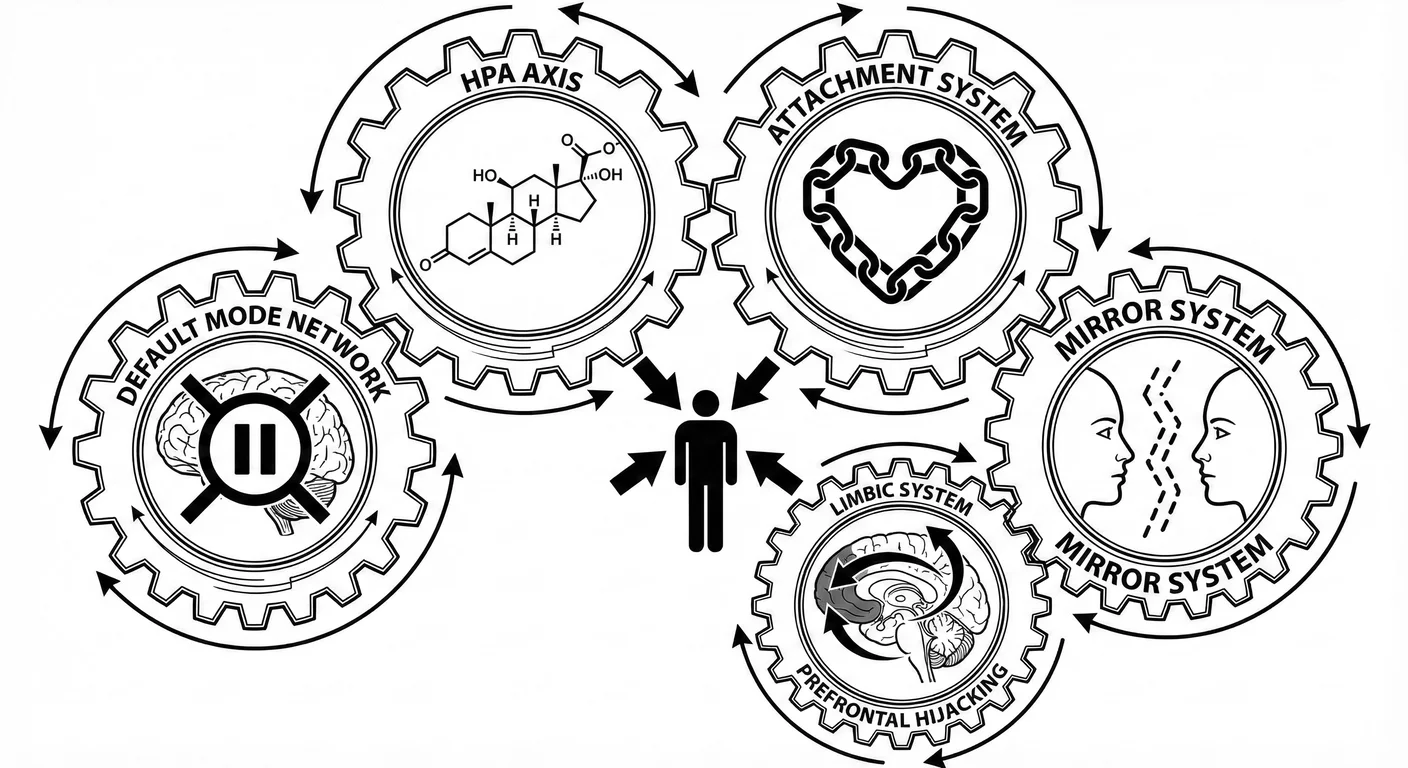
Five mechanisms mediate this neurological impact:
[style=nextline,leftmargin=1.5em]
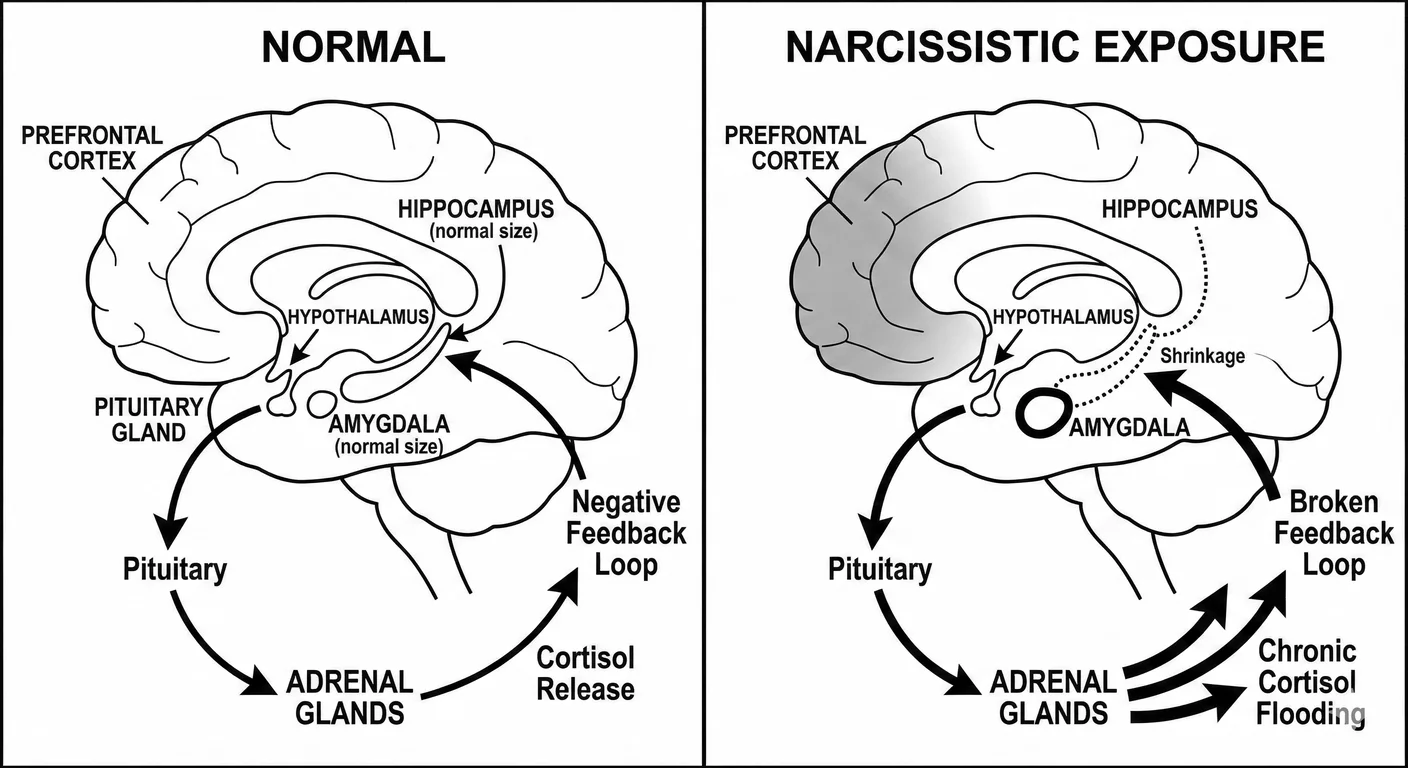
Chronic stress and HPA axis dysregulation: Sustained exposure to unpredictable threat recalibrates the hypothalamic-pituitary-adrenal axis, the body’s central stress response system. Cortisol Cortisol The body's primary stress hormone, chronically elevated during narcissistic abuse, causing widespread damage to brain structure and bodily health. , designed for acute threats, becomes chronic, damaging the Hippocampus Hippocampus The brain structure essential for memory formation and consolidation, often reduced in size by chronic stress and trauma from narcissistic abuse. and Prefrontal Cortex Prefrontal Cortex The brain region behind the forehead governing executive functions, impulse control, and emotional regulation—often structurally or functionally different in narcissists. while sensitising the Amygdala Amygdala The brain's emotional processing center that governs fear responses and threat detection, often hyperactive in both narcissists and their victims. .
Attachment system conditioning: The intermittent reinforcement pattern characteristic of narcissistic relationships—unpredictable alternation between reward and punishment—creates addiction-like changes in attachment circuitry, bonding the victim to their abuser through neurochemical mechanisms rather than genuine connection.
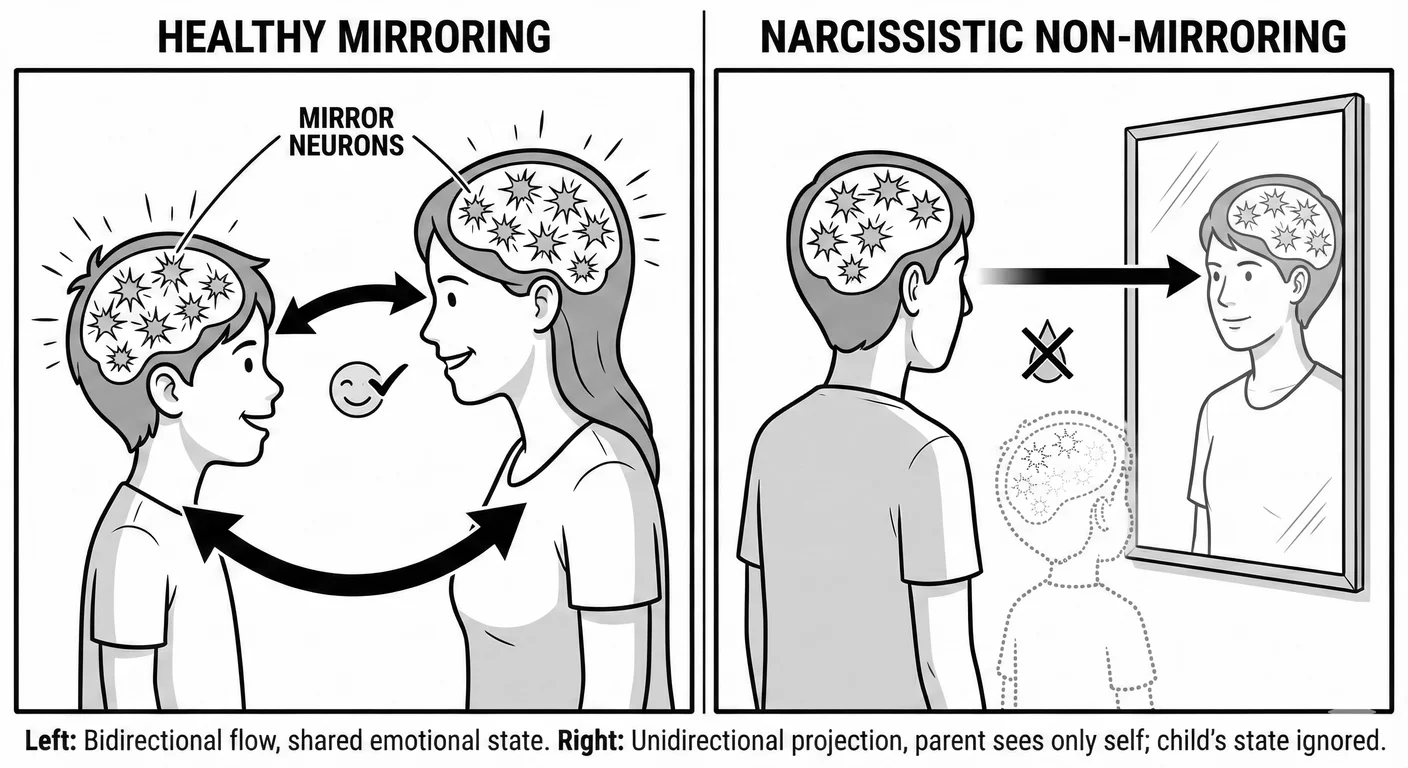
Mirror system atrophy: The narcissist’s failure to mirror the other’s emotional states—their inability to reflect back what they receive—leads to gradual atrophy in the victim’s own mirroring capacities. You cannot develop what is never exercised.
Prefrontal hijacking: The constant demands of managing a narcissist redirect prefrontal executive function from self-directed goals to threat management, altering how cognitive resources are allocated.
Default mode network disruption: The inability to safely disengage from external monitoring prevents the default mode network from performing its restorative functions, disrupting self-reflection, memory consolidation, and emotional processing.
These are not independent processes. They interact, amplify each other, and create cascading effects that reshape the brain comprehensively. The victim does not experience discrete symptoms; they experience a global shift in how their brain operates.
These five mechanisms—chronic stress, attachment conditioning, mirror system atrophy, prefrontal hijacking, and DMN disruption—describe how proximity reshapes brains. Chapter will demonstrate that smartphones and social media activate all five mechanisms simultaneously, creating what amounts to a narcissistic relationship at industrial scale. The neuroplasticity of proximity has been weaponised and deployed in every pocket.
The Stress Response Recalibrated
The HPA Axis HPA Axis The hypothalamic-pituitary-adrenal axis—the body's central stress response system. Chronic activation from ongoing abuse or trauma can dysregulate this system, leading to lasting effects on stress hormones, mood, and physical health. —the stress thermostat calibrated through early caregiving (Chapter )—evolved for acute threats. Once danger passes, cortisol drops and the body recovers.
What happens, though, when the threat never passes? When the predator lives in your house?
The Chronic Cortisol Environment
Living with a narcissist means living with chronic, unpredictable threat. 1272 The rage that erupts without warning. The criticism that can emerge from any direction. The shifting standards that ensure you are always failing at something. The gaslighting that makes you doubt whether the threat is real even as your body screams that it is. This environment keeps the HPA axis perpetually activated—not at full emergency levels, but never at rest either.
Chronic cortisol exposure has well-documented effects on brain structure: 833
[topsep=4pt,itemsep=2pt]
-
Hippocampal damage: The hippocampus, essential for memory consolidation and contextual processing, is highly vulnerable to cortisol. Chronic elevation causes dendritic atrophy and can reduce hippocampal volume by 10-15%. Victims often report memory problems—difficulty forming new memories, fragmented recall of traumatic events, confusion about sequences and timelines.
-
Amygdala sensitisation: While cortisol damages the hippocampus, it sensitises the amygdala, making it more reactive to threat cues. The amygdala grows more vigilant and easily triggered. Hypervigilance becomes second nature—the constant scanning, the startle responses, the inability to relax even in safe environments.
-
Prefrontal cortex impairment: The prefrontal cortex—responsible for executive function, emotional regulation, and rational decision-making—also responds to cortisol. Chronic exposure impairs working memory, reduces cognitive flexibility, and compromises the ability to regulate emotional responses. The victim becomes less able to think clearly, plan effectively, or modulate their reactions—precisely the capacities they most need.
The Unpredictability Factor
If chronic stress alone were the issue, victims might adapt. Humans are highly resilient when they can predict and prepare for challenges. But unpredictability characterises narcissistic abuse—the intermittent reinforcement pattern that makes it neurologically devastating. 341
Unpredictable stress is far more damaging than predictable stress of equal intensity. 783 When an organism cannot predict threat, it cannot prepare for it, and it cannot stand down when threat is absent. The stress response must remain perpetually activated because the next assault could come at any moment.
The narcissist’s behaviour is inherently unpredictable because internal states govern it—supply needs, narcissistic injury, mood fluctuations—that the victim cannot see or control. The same action that earned praise yesterday triggers rage today. The partner who was loving this morning is cold and dismissive tonight. No reliable pattern exists to learn, no way to achieve safety through compliance. The victim’s stress system learns that the only rational response is permanent vigilance.
This response accurately adapts to genuinely unpredictable threat. The tragedy: this adaptation becomes suffering, persisting long after the environment changes.
The Attachment System Hijacked
Attachment is a neurobiological system running through specific brain circuits and neurochemicals. 146 It evolved to keep infants close to caregivers and to motivate adults to maintain pair bonds. Its power reflects evolutionary necessity—survival depended on it.
Narcissistic relationships hijack this system, harnessing its power for control rather than connection.
The Neurochemistry of Bonding
Three neurochemical systems drive attachment: 949
[style=nextline,leftmargin=1.5em]
The opioid system: Endogenous opioids—the brain’s natural painkillers—are released during positive social contact, creating feelings of warmth and wellbeing. Physical touch, emotional intimacy, and social inclusion all trigger opioid release. Separation and rejection trigger opioid withdrawal, producing physical and emotional pain.
The oxytocin system: Oxytocin Oxytocin The 'bonding hormone' released during intimacy and connection—manipulated in narcissistic relationships to create attachment despite abuse. , often called the “bonding hormone,” is released during intimate contact, including sex and extended eye contact. It promotes trust, reduces anxiety, and strengthens social bonds. Oxytocin released during reconciliation after conflict strengthens attachment even more than oxytocin released during uncomplicated positive interactions.
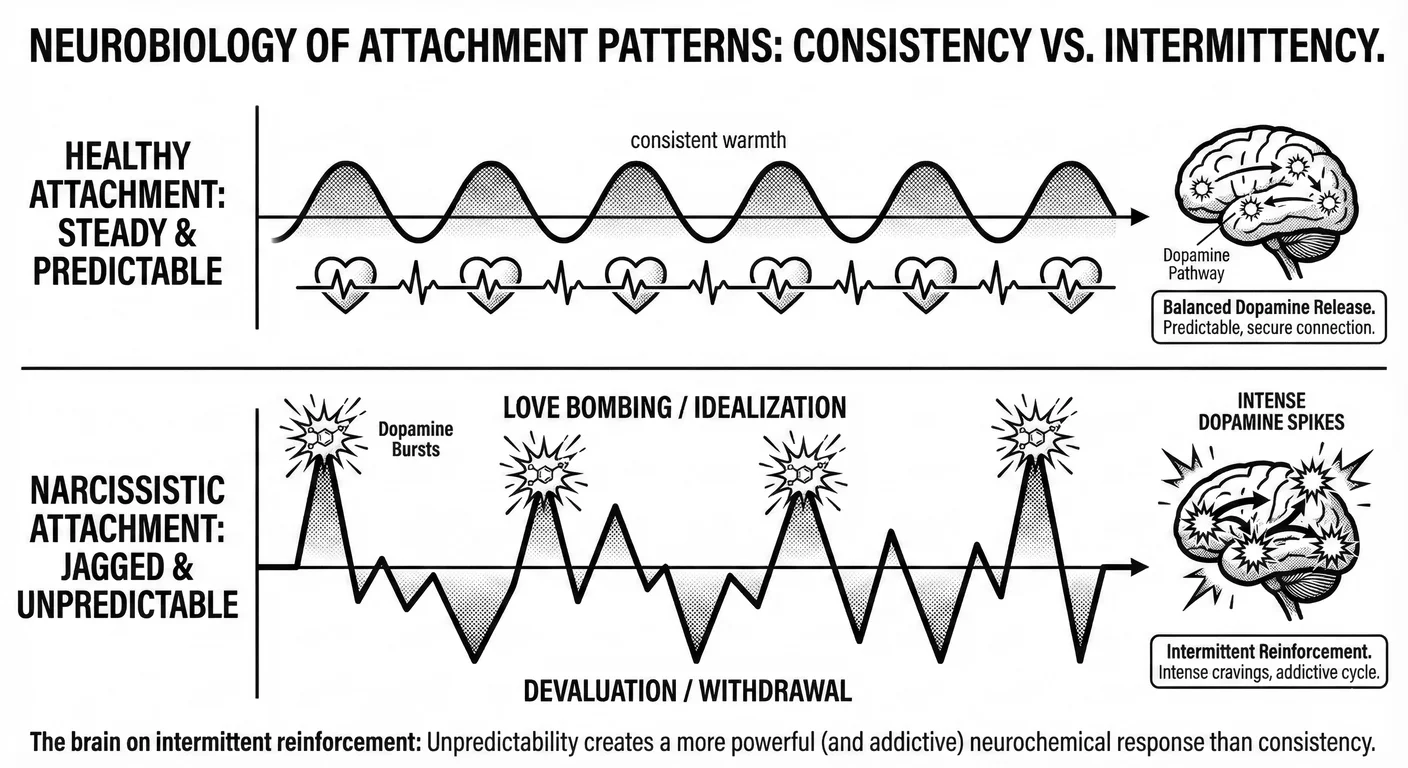
The dopamine system: Dopamine Dopamine A neurotransmitter associated with reward, motivation, and pleasure—hijacked in narcissistic relationships through intermittent reinforcement creating addiction-like attachment. mediates reward and motivation. In attachment contexts, it creates the craving to be with the attachment figure, the pleasure of reunion, and the drive to maintain the relationship. Dopamine responds most strongly to unpredictable rewards—the same principle that makes gambling addictive. 1102
These systems work together to create attachment bonds. Normally, they bond us to people who provide consistent care and reciprocal connection. But they can be exploited.
Intermittent Reinforcement and Addiction
The Intermittent Reinforcement Intermittent Reinforcement An unpredictable pattern of rewards and punishments that creates powerful psychological dependency, making abusive relationships extremely difficult to leave. introduced in Chapter —the most powerful form of behavioural conditioning—operates through specific neurochemical pathways. The narcissistic relationship pattern hijacks the attachment system through multiple channels. 393
The dopamine system responds most strongly not to consistent reward but to intermittent, unpredictable reward—each interaction with the narcissist might be the return to the wonderful person from the beginning.
When the narcissist occasionally provides warmth after a period of coldness, the dopamine surge is more intense than it would be from consistent warmth. The relief and reunion trigger massive opioid release—the pain of withdrawal suddenly relieved. Oxytocin floods the system during the makeup phase, strengthening the bond precisely when the relationship is most toxic.
The victim is not bonded despite the abuse. They are bonded because of the pattern of abuse. The neurochemistry of intermittent reinforcement creates stronger attachment than healthy, consistent love could. Victims report that they “love” their abusers in ways that feel more intense than previous relationships. They return repeatedly despite knowing they should not. The prospect of leaving triggers panic that feels like dying.
This is addiction—mediated by the same neural circuits and neurochemicals that drive substance dependence.
Attachment Style Modification
Beyond the addiction-like bonding, sustained narcissistic relationships can modify attachment style itself. 860 Attachment styles—secure or insecure—were long thought to be established in infancy and relatively stable thereafter. But research now demonstrates that attachment styles can shift in response to adult relationship experiences, particularly intense or prolonged ones.
A person who entered the relationship with secure attachment may emerge with anxious attachment—hyperactivated attachment circuitry that monitors and cannot tolerate separation. Or they may emerge with avoidant attachment—deactivated circuitry that suppresses attachment needs to avoid further pain. Or, most damagingly, they may develop disorganised attachment—the simultaneous activation of approach and avoidance that creates paralysis and dissociation.
These patterns reflect neurological changes in how the brain processes attachment-relevant stimuli, regulates attachment-related affect, and generates attachment behaviours. The narcissist has rewritten the victim’s attachment operating system.
The Mirror That Does Not Reflect
Human brains contain mirror neuron systems—networks of neurons that activate both when we perform an action and when we observe someone else performing that action. 1038 These systems form the foundation of empathy, emotional contagion, and social learning. When you wince at someone else’s pain, when you feel anxious watching someone anxious, when you learn a new skill by observation—mirror systems are involved.
Mirror systems also underlie feeling “seen” by another person. When someone accurately perceives and reflects your emotional state—when they mirror you—your brain registers this as connection, validation, existence. Being mirrored is neurologically rewarding and developmentally essential. Infants require mirroring for healthy emotional development. Adults require it for emotional regulation and relational satisfaction.
The Narcissist’s Mirroring Deficit
Narcissists have impaired mirror neuron function. 1104 They can cognitively recognise emotions but do not automatically simulate them. When you express pain to a narcissist, their brain does not generate the corresponding pain response that would motivate compassionate response. Your experience remains abstract information rather than felt reality.
The narcissist does not mirror their partner’s, child’s, or colleague’s emotional states. The reflection that healthy relationships provide—the sense of being seen, understood, validated—is absent. You send signals outward and nothing comes back. Or worse: something distorted comes back, a funhouse mirror that reflects not your actual state but the narcissist’s projections onto you.
Atrophy Through Disuse
What happens to mirror systems that are never engaged in reciprocal mirroring?
Neuroscience suggests they atrophy. Neural systems that are not exercised weaken—the “use it or lose it” principle of neuroplasticity. 956 If you spend years in a relationship where your emotions are never accurately mirrored, where no one truly sees you, the neural systems that process mirroring may weaken.
A cruel secondary effect follows: victims of narcissistic relationships may find their own empathic capacities diminished. They may become less able to mirror others, less able to feel their way into others’ experiences. They are not becoming narcissists—the mechanism is different—but they are losing capacities that healthy relationships maintain.
Clinicians observe this: survivors of narcissistic relationships sometimes report feeling “numb” to others’ emotions, unable to connect in ways they once could. They may become hypervigilant to others’ states (a threat-detection adaptation) while simultaneously being unable to empathically engage with those states (a mirror-system atrophy effect). They monitor without connecting, scan without feeling.
Mirror systems can rebuild with appropriate relational experience. But the rebuilding requires what the narcissistic relationship denied: sustained exposure to accurate, reciprocal mirroring.
The Hijacked Executive
The prefrontal cortex is the brain’s executive—the region responsible for planning, decision-making, impulse control, working memory, and the regulation of emotion and behaviour. It is the most recently evolved part of the brain and the most vulnerable to disruption. Stress impairs it. Sleep deprivation impairs it. And narcissistic relationships systematically redirect its resources from self-directed functioning to threat management.
Cognitive Load and Resource Diversion
Managing a narcissist requires enormous cognitive resources. You must:
[topsep=4pt,itemsep=2pt]
-
Constantly monitor their emotional state for signs of impending rage or withdrawal
-
Track multiple versions of events (what happened, what they claim happened, what they will claim happened later)
-
Anticipate their needs before they become demands
-
Manage your own presentation to avoid triggering injury
-
Suppress your own emotional responses that might provoke reaction
-
Process gaslighting attempts while maintaining some grip on reality
-
Plan around their unpredictability while appearing spontaneous
-
Maintain a public façade that hides the private dysfunction
Each of these tasks requires prefrontal engagement. Together, they consume prefrontal capacity that would otherwise be available for the victim’s own goals and wellbeing. The victim becomes cognitively depleted—not because they are stupid or weak, but because their prefrontal resources have been commandeered.
The cognitive fog that victims report—difficulty concentrating, impaired decision-making, inability to plan or execute complex tasks—follows directly. Their intelligence hasn’t diminished. Their cognitive resources are simply no longer available for self-directed use.
The Automatisation of Hypervigilance
Over time, hypervigilance becomes automatised. Tasks that initially required conscious prefrontal effort become automatic, handled by subcortical systems. The monitoring of the narcissist’s state, the threat assessment, the preparation of responses—these processes sink below conscious awareness and run continuously in the background.
This seems like it might free up prefrontal resources, but it does not. The automatic threat-detection systems still consume energy, still generate stress responses, still maintain the body in a state of readiness. And the prefrontal cortex must still engage whenever the automatic systems detect potential threat—which, given their sensitisation, is constantly.
The brain organises around threat management: threat detection runs automatically, threat response stays on standby. This persists after the narcissistic relationship ends—the brain has structurally reorganised to prioritise threat. Survivors cannot stop monitoring, cannot relax, cannot feel safe even in safe environments. Hypervigilance has become neurologically embedded.
The Default Mode Disrupted
The default mode network (DMN) is a set of brain regions that activate when we are not engaged in external tasks—when we are daydreaming, reflecting on ourselves, thinking about others, remembering the past, or imagining the future. 1020 The DMN is not idle. It performs essential work: self-reflection, social cognition, memory consolidation, and emotional processing.
The DMN requires disengagement from external demands to function. It activates when you stop monitoring the environment and turn attention inward. Rest and sleep allow DMN functions to proceed.
The Impossibility of Disengagement
In a narcissistic relationship, disengagement is dangerous. Letting your guard down, turning attention inward, ceasing to monitor—these create vulnerability. The narcissist may strike when you are not watching. The environment may shift while you are not tracking it. Safety requires constant external focus.
This prevents DMN activation and the functions it supports. You cannot think about who you are when consumed with managing who they are. Memories cannot be processed when the system never reaches rest. Emotions cannot be worked through when attention cannot safely turn inward.
Self-experience fragments. Without adequate DMN function, the continuous sense of self across time is disrupted. Victims feel fragmented, unable to remember who they used to be. Beyond psychological distress, this reflects actual disruption of neural processes maintaining coherent self-representation.
The Intrusion of Rumination
When DMN function is disrupted by chronic threat, it shifts into a pathological mode: rumination. 519 Instead of healthy self-reflection, the DMN generates repetitive thoughts focused on threat and failure. The victim cannot stop thinking about the narcissist—replaying conversations and anticipating future attacks.
This rumination consumes the DMN without providing its benefits. The victim is stuck in self-referential processing—but it is threat-focused rather than integrative. The DMN is running, but running in circles, unable to perform the consolidation and processing that would allow resolution and recovery.
The Vector of Transmission
The mechanisms described above—HPA dysregulation, attachment hijacking, mirror atrophy, prefrontal hijacking, DMN disruption—combine to reshape the brains of those in sustained narcissistic relationships. This reshaping is the mechanism by which narcissistic dysfunction transmits across relationships and generations.
From Partner to Partner
When someone emerges from a narcissistic relationship, their brain carries the imprint of that relationship. Their stress responses are recalibrated, their attachment system is conditioned, their executive function is depleted, their sense of self is fragmented. They carry these changes into subsequent relationships.
This creates vulnerability to further narcissistic relationships. The conditioned attachment system responds to intermittent reinforcement as familiar, even comfortable. Depleted prefrontal function impairs judgement needed to detect red flags. The fragmented self craves the intense attention of idealisation. Disrupted stress response cannot accurately distinguish safe from dangerous.
Survivors of narcissistic abuse often find themselves in subsequent narcissistic relationships. They are not attracted to narcissists in some conscious sense. Their neurologically reshaped systems respond to narcissistic patterns as familiar and neurochemically rewarding in their terrible way.
Breaking this cycle requires neurological rehabilitation—literally rewiring the systems that have been conditioned by abuse. Insight alone is insufficient. The work is possible but takes time and usually requires professional support.
From Parent to Child
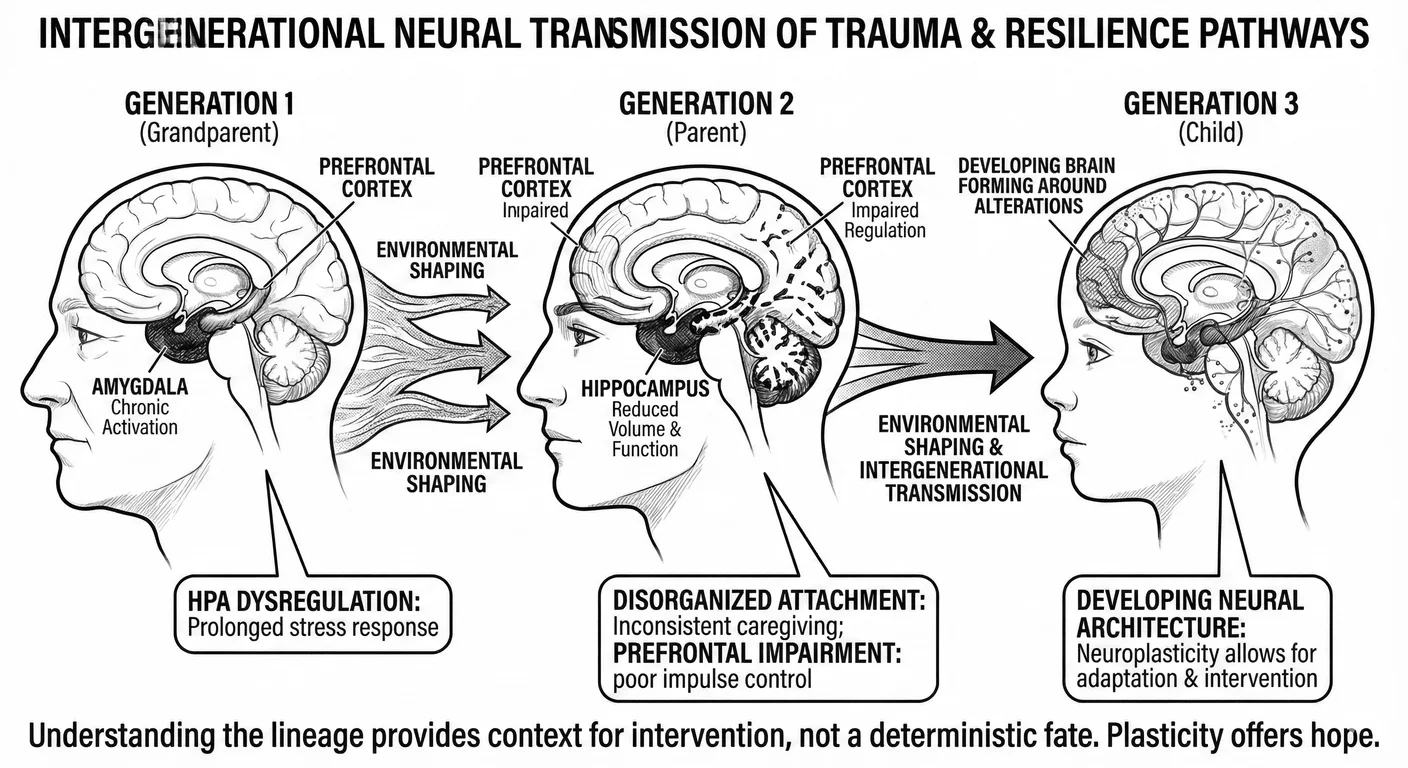
The most consequential transmission is from narcissistic parent to developing child. 1097 972 Adult brains, while plastic, have already formed their basic architecture. The reshaping caused by narcissistic relationships occurs against a background of established structure. Children have no such background. Their brains are forming during narcissistic exposure, building their foundational architecture in an environment shaped by narcissistic dysfunction.
The infant’s brain develops through relationship. Neural connections form and prune based on experience. The attachment system organises around available caregivers. The stress response calibrates to the expectable environment. The social brain develops through interaction. When the primary relationship is with a narcissistic parent, all of these developmental processes are distorted.
[topsep=4pt,itemsep=2pt]
-
The attachment system organises around unpredictability rather than security, creating disorganised attachment that will persist into adulthood and affect all subsequent relationships.
-
The stress response calibrates to chronic threat, setting the HPA axis to a baseline of vigilance that will shape responses to stress throughout life.
-
The mirror systems develop without adequate mirroring, shaping empathic capacity and the sense of being a valid person whose internal states matter.
-
The prefrontal cortex develops under chronic stress, impairing executive function development and emotional regulation capacity.
-
The default mode network develops without the safety needed for healthy self-reflection, disrupting identity formation and self-coherence.
The child does not learn narcissistic behaviour in a cognitive sense that could be unlearned. The child’s brain is built in a narcissistic environment, shaped at the level of neural architecture. The effects are not memories that can be processed or beliefs that can be challenged. They are structures that form the foundation on which everything else is built.
This is intergenerational transmission —narcissistic caregiving environments reshape developing brains, beyond genetics or behavioural modelling. The narcissist’s dysfunction becomes the environment in which the next generation’s brains form.
The Contagion Beyond Family
While parent-child transmission is deepest, the neurological reshaping by narcissists extends beyond family relationships. Any sustained close contact reshapes the brain, though typically less severely than primary attachment figures do.
Intimate Partners
Adult romantic relationships, while entered with already-formed brains, involve sufficient intimacy and duration to produce significant neural reshaping. Partners of narcissists often show: 548
[topsep=4pt,itemsep=2pt]
-
PTSD or complex PTSD symptoms, reflecting HPA axis dysregulation
-
Trauma bonding, reflecting attachment system conditioning
-
Cognitive fog and impaired executive function
-
Identity confusion and fragmented self-narrative
-
Difficulty trusting subsequent partners, reflecting altered attachment templates
These changes can persist for years after the relationship ends, requiring active rehabilitation rather than simple passage of time.
Workplace Exposure
Employees under narcissistic managers show measurable effects: 132
[topsep=4pt,itemsep=2pt]
-
Elevated cortisol levels during work hours
-
Hypervigilance and anxiety that extends beyond the workplace
-
Impaired job performance despite intact underlying abilities
-
Cynicism and disengagement that affects subsequent employment
-
Physical health effects including cardiovascular and immune dysfunction
While less intense than family or romantic exposure, workplace narcissism affects many more people and creates widespread, if more diffuse, neurological impact.
Social and Political Exposure
Even more diffuse exposure—through social groups, community organisations, or political leadership—can have neurological effects at scale. When narcissistic leaders control information environments, create chronic uncertainty, and demand loyalty, they create population-level stress responses. The mechanisms are the same; the exposure is less intense but broader.
Narcissistic leadership has neurological dimensions beyond the political or social. Populations governed by narcissistic leaders may show measurable shifts in stress hormones, trust levels, and social behaviour that reflect the contagion of narcissistic dysfunction at societal scale.
Breaking the Chain
Neurological transmission need not be destiny. Reshaped brains can reshape again. The same plasticity that allowed the damage allows recovery.
The Requirements for Neural Rehabilitation
Recovery from narcissistic reshaping demands: 546
[style=nextline,leftmargin=1.5em]
Safety: The brain cannot recalibrate its stress systems while still under threat. Neurological recovery typically requires physical and emotional distance from the narcissist.
Time: Neural remodelling is slow. The changes caused by years of narcissistic exposure will not resolve in weeks or months. Recovery is measured in years.
Corrective experience: The brain needs new experiences to build new patterns. Relationships that provide consistent attunement, accurate mirroring, and secure attachment can slowly recondition the systems that narcissistic exposure distorted.
Therapeutic support: For many, the damage is too extensive for spontaneous recovery. Trauma-informed therapy—EMDR, somatic experiencing, attachment-focused therapy—can accelerate and guide the recovery process.
The Possibility of Prevention
The mechanism of transmission opens possibilities for prevention. Protective Factors Protective Factors Elements that buffer against trauma's effects and support recovery—including safe relationships, coping skills, social support, and internal resources. include: 1314
[topsep=4pt,itemsep=2pt]
-
Alternative relationships: One secure attachment figure can buffer against the effects of one insecure one. Children of narcissistic parents are protected by relationships with secure grandparents, teachers, or other adults.
-
Psychoeducation: Understanding what is happening neurologically can reduce self-blame and provide a framework for recovery. Knowing that your responses are normal adaptations to abnormal circumstances is itself therapeutic.
-
Limited exposure: When escape remains impossible, minimising contact and emotional engagement (Grey Rock strategies) reduces the intensity of neurological reshaping.
-
Self-care practices: Interventions that directly address stress physiology—exercise, sleep, meditation, social connection with non-narcissistic others—can partially counteract the HPA dysregulation caused by narcissistic exposure.
The Moral Weight of Transmission
The neurological transmission of narcissism raises difficult ethical questions. If narcissistic exposure literally reshapes victims’ brains, what are the implications for responsibility, for legal frameworks, for how we understand the harm narcissists cause?
The victim whose attachment system has been hijacked into addiction-like bonding is not “choosing” to stay. The adult child whose stress responses were calibrated by narcissistic parenting is not “choosing” their anxiety. The employee whose executive function has been depleted by a narcissistic manager is not “choosing” poor performance. These are neurological states imposed by the narcissist’s environment, not failures of will.
At the same time, the narcissist whose own narcissistic upbringing shaped their brain did not choose their condition either. They are transmitting what was transmitted to them, through mechanisms they do not understand and cannot entirely control.
This does not excuse the harm narcissists cause. Understanding mechanism does not eliminate responsibility. But it does reframe the phenomenon from a collection of individual pathologies to a contagion that spreads through relationships and generations, reshaping brains as it goes. The narcissist is both perpetrator and victim of this contagion—shaped by others, shaping others in turn.
Breaking the chain requires intervention at multiple levels—protecting individuals from exposure and treating those already affected.
The Dimensional Cost: Personality Under Pressure
The neurological changes described above are not abstractions. They manifest in measurable shifts in personality—the stable patterns of thinking, feeling, and behaving that psychologists assess through dimensional frameworks. The most established of these frameworks, the Five Factor Model—also called the Big Five—measures personality across five dimensions. 269
Research shows that adverse experiences—chronic exposure to unpredictable stress, emotional abuse, and attachment disruption—systematically alter these dimensions. 1162 The neurological damage caused by narcissistic exposure translates directly into personality shifts that can persist long after the exposure ends.
Neuroticism: The Dimension Most Affected
Neuroticism—the tendency towards negative emotional states including anxiety and depression—shows the strongest and most consistent relationship with childhood maltreatment and chronic stress. 867 Meta-analytic research synthesising data from over 48,000 individuals found that adverse childhood experiences are most strongly related to elevated neuroticism, with emotional abuse and emotional neglect showing the strongest effects. 939 The neurological pathways are clear:
[topsep=4pt,itemsep=2pt]
-
Amygdala sensitisation creates heightened threat detection, translating neurologically into the chronic anxiety and fear that define high neuroticism.
-
HPA axis dysregulation produces the cortisol patterns associated with depression and emotional volatility—cardinal features of the neuroticism dimension.
-
Reduced hippocampal volume impairs the contextual processing that would allow appropriate fear responses, leaving the individual reactive to stimuli that should not trigger alarm.
-
Weakened prefrontal-amygdala connectivity compromises emotion regulation capacity, manifesting as the emotional instability and difficulty managing negative affect that characterise high neuroticism. 1219
Vulnerable narcissism—the form most strongly linked to childhood maltreatment—shows approximately 65% of its variance explained by neuroticism alone. 867 The personality structure most common in narcissistic family environments is primarily one of elevated neuroticism, written into the brain by chronic stress exposure.
Conscientiousness: Executive Function Deficit
Conscientiousness—the tendency towards self-discipline, organisation, goal-directed behaviour, and impulse control—depends heavily on prefrontal cortex function. When the prefrontal cortex is impaired by chronic cortisol exposure or hijacked by threat management demands, conscientiousness suffers.
Childhood maltreatment consistently associates with reduced conscientiousness: 939
[topsep=4pt,itemsep=2pt]
-
Working memory impairment from chronic stress reduces the capacity to hold goals in mind while executing complex plans.
-
Cognitive depletion from hypervigilance leaves insufficient resources for the self-regulation that conscientiousness requires.
-
Executive function hijacking redirects the neural systems underlying conscientiousness from self-directed goals to threat management.
-
Prefrontal volume reduction observed in those with significant childhood adversity directly reduces the structural substrate of conscientious behaviour. 1219
The irony is bitter: children raised by narcissistic parents are often criticised for being disorganised, unfocused, or lacking discipline—criticisms that reinforce the narcissist’s view of the child as defective. Yet the very neurological machinery required for conscientiousness has been damaged by the narcissist’s environment. The child is blamed for the consequences of the damage inflicted upon them.
Extraversion and Openness: Withdrawal from the World
Extraversion—the tendency towards positive emotionality and social engagement—and Openness to Experience are both reduced by narcissistic exposure, though less dramatically than neuroticism is elevated:
[topsep=4pt,itemsep=2pt]
-
Reward system dysregulation: The dopamine system, repeatedly hijacked by intermittent reinforcement, becomes less responsive to normal positive experiences. The anhedonia common in survivors reflects a reward system that no longer responds normally to pleasure.
-
Social withdrawal as protection: When close relationships have been sources of pain, the brain learns to avoid social engagement. This manifests as reduced extraversion—not preference for solitude but learned avoidance of connection.
-
Threat-narrowed attention: Openness to experience requires cognitive resources that chronic threat monitoring consumes. The brain focused on survival has little capacity for curiosity, exploration, or creative engagement.
-
Default mode network disruption: The imaginative and self-reflective capacities that underlie openness require DMN function, which narcissistic environments systematically impair.
Adults who experienced childhood trauma show significant associations with both reduced extraversion and reduced openness. 1162 These are not personality preferences freely chosen but neurological consequences imposed by the environment.
Agreeableness: The Complex Outcome
Agreeableness—the tendency towards cooperation and trust—shows a more complex pattern in survivors of narcissistic environments. Some become hyperagreeable, compulsively accommodating others’ needs at the expense of their own. Others become disagreeable and mistrustful. Both patterns reflect neurological adaptation to the narcissistic environment.
Hyperagreeableness develops when accommodation was the survival strategy—when anticipating and meeting the narcissist’s needs provided the only safety available. The brain learns that survival requires prioritising others’ states over one’s own. This manifests as the codependent, people-pleasing patterns common in adult children of narcissists.
Low agreeableness develops when the lesson learned was that others cannot be trusted, that cooperation leads to exploitation, that self-protection requires antagonism. The mirror neuron atrophy described earlier may contribute, reducing the automatic empathic responses that facilitate agreeable behaviour.
Both patterns cause damage. Hyperagreeable individuals have lost access to healthy self-assertion; disagreeable individuals have lost access to healthy connection. Neither reflects genuine personality preference—both reflect adaptation to a pathological environment.
The Research Evidence
A meta-analysis examining the relationship between the Big Five and all common mental disorders found that low conscientiousness was consistently associated with PTSD, depression, anxiety disorders, and substance use disorders—the conditions most prevalent in survivors of narcissistic environments. 682
Children of parents with Cluster B personality disorders (including NPD and BPD) show: 780 1182
[topsep=4pt,itemsep=2pt]
-
Significantly elevated rates of disorganised attachment
-
Higher levels of emotional dysregulation
-
Increased rates of internalising and externalising disorders
-
Greater risk of developing personality pathology themselves
-
Impaired social cognition and mentalisation capacity
Genetic transmission alone cannot adequately explain these outcomes. Adoption studies and studies of children raised by non-biological caregivers demonstrate that the caregiving environment—beyond genetic inheritance—substantially contributes to personality outcomes. 138
The Milgram Parallel: Personality Under Situational Pressure
The personality shifts caused by narcissistic exposure parallel findings from one of psychology’s most famous demonstrations: Stanley Milgram’s obedience experiments. 861
Milgram showed that ordinary people, placed in situations of hierarchical authority and graduated escalation, would administer what they believed were dangerous electric shocks to another person. Sixty-five percent went to the maximum voltage. The situational pressure—the authority figure, the incremental escalation, the diffusion of responsibility—overrode individual personality differences.
Participants in Milgram’s experiment showed measurable personality changes during the procedure: heightened anxiety, nervous laughter, sweating, trembling. Many displayed “agentic state”—a shift into viewing themselves as mere instruments of the authority figure’s will, with diminished personal responsibility. Some experienced lasting psychological effects from their participation. 971
The parallel to narcissistic parenting is stark:
[topsep=4pt,itemsep=2pt]
-
Authority structure: The narcissistic parent occupies absolute authority, their reality the only reality that matters.
-
Graduated escalation: Like Milgram’s incremental voltage increases, the demands of the narcissistic parent escalate gradually, each step normalised by the previous one.
-
Diffusion of responsibility: Children learn to attribute causality to the narcissist’s moods and needs, not to the narcissist’s choices. “I made them angry” rather than “They chose to rage.”
-
Agentic shift: Children of narcissists often describe feeling like instruments of the parent’s will, their own needs and preferences erased in service of the narcissist’s agenda.
-
Persistent effects: Like some Milgram participants, children of narcissists carry lasting psychological changes from their exposure.
A key difference exists: Milgram’s participants were exposed for an hour. Children of narcissists are exposed for years—during the critical periods when personality forms. If brief situational pressure can produce measurable effects in adults with established personalities, the effect of sustained pressure on developing personalities is correspondingly greater.
The Milgram experiments demonstrated that personality is more situationally malleable than trait theory suggests. Narcissistic family environments provide the sustained, intense version of that demonstration, showing that chronic exposure permanently reshapes personality structure beyond temporary suppression of personality expression.
Measurement and Recovery
The personality changes caused by narcissistic exposure can be measured using standard Big Five assessments. 269 Survivors often score:
[topsep=4pt,itemsep=2pt]
-
High on Neuroticism (reflecting HPA dysregulation and amygdala sensitisation)
-
Low on Conscientiousness (reflecting prefrontal impairment)
-
Variable on Extraversion (reflecting reward system damage and social withdrawal)
-
Variable on Openness (reflecting DMN disruption and threat-narrowed attention)
-
Variable on Agreeableness (reflecting either hyperaccommodation or learned mistrust)
Personality is not fixed. Research on personality change across the lifespan demonstrates that experience can shift personality dimensions, including through therapeutic intervention. 1040 Recovery from narcissistic exposure often involves measurable personality change: declining neuroticism, recovering conscientiousness, and normalising extraversion and openness as the brain heals.
Clinically, this matters. Intake personality assessments may not reflect “true” personality but personality deformed by narcissistic exposure. Tracking therapy progress through personality change—the gradual restoration of the dimensional profile that existed before the damage, or that would have existed without it—offers a measurable path forward.
The neurological damage is real. The personality consequences are measurable. But neither is destiny. The same plasticity that allowed the narcissistic environment to reshape the brain allows therapeutic environments to reshape it again.
Conclusion: The Sculpted Brain
Emma, from this chapter’s opening, eventually left David. But she did not leave unchanged. Her brain carried twelve years of adaptation to his narcissism: the hypervigilant amygdala, the cortisol-bathed hippocampus, the hijacked prefrontal cortex, the addiction-conditioned attachment system, the atrophied mirroring capacity, the disrupted default mode network.
Her recovery required more than leaving. Rebuilding—slowly, with therapeutic support and corrective relationships, rewiring what had been rewired—became the work. Five years later, she reports feeling like herself again, but a different self: one who understands, now, how deeply those we are close to shape us.
The brains of those around narcissists are not separate from the narcissist’s dysfunction. They are sculpted by it, reshaped by it, made into vessels that carry the dysfunction forward. This is the contagion: not ideas passed from mind to mind, but neural patterns transmitted from brain to brain through the terrible intimacy of close relationship.
Narcissism is not a contained individual pathology but a spreading pattern that reshapes every brain it touches. The narcissist’s dysfunction becomes the environment; the environment becomes the next generation’s brain; and the cycle continues until something or someone breaks the chain.
Continue reading "The Contagion"
Get the complete book with all 21 chapters, plus PDF and EPUB downloads for offline reading.
One-time purchase. No subscription required.
Enjoying the book?
Get the complete book with all 21 chapters in PDF and EPUB formats.
Buy Now – $12.99